

What Is a Stainless Steel Precision Slitting Line 2026 Complete Guide for Global Buyers
This guide is developed by Zibo Ruilin Machinery Co., Ltd., a professional metal processing equipment manufacturer serving over 500 global clients across metallurgy, automotive, new energy, and home appliance sectors. A stainless steel precision slitting line is a core metal forming equipment widely used to process stainless steel coils into dimensionally accurate narrow strips, solving common pain points such as surface scratches, edge burrs, and tension instability during thin-gauge material processing. Many engineers, procurement specialists, and factory operators still hold misconceptions about its working principles, performance parameters, and applicable scenarios. This guide draws on years of global project experience to break down its core definition, working mechanism, key performance metrics, industry applications, and common selection pitfalls, helping buyers make informed equipment investment decisions.

Core Definition and Industry Positioning
Per global metal processing industry standards, a stainless steel precision slitting line refers to a dedicated processing system that performs continuous uncoiling, tension control, precision slitting, and recoiling of stainless steel coils, with specialized designs to prevent surface damage on high-aesthetic stainless steel surfaces. Unlike general-purpose slitting lines built for carbon steel, it integrates non-destructive contact components and precision tension systems to preserve the original surface finish of mirror, brushed, or coated stainless steel materials.
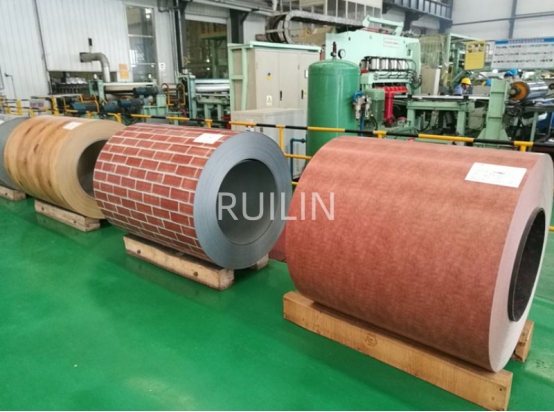
Its core industry value includes three key advantages: high dimensional accuracy that eliminates secondary trimming, low surface defect rates that reduce rework costs, and high continuous operation efficiency that supports high-volume production.
Performance Comparison With Alternative Solutions
Technical Indicator | Stainless Steel Precision Slitting Line | General Carbon Steel Slitting Line | Manual Slitting Process |
|---|---|---|---|
Width Tolerance | ±0.05mm | ±0.2mm | ±1mm |
Surface Defect Rate | Less than 0.5% | 3-5% | 10%+ |
Maximum Line Speed | 260m/min | 120m/min | 15m/min |
Material Adaptability | 0.1-20mm stainless steel, aluminum, high-strength steel | Carbon steel only | Thick-gauge carbon steel only |
The performance gap between dedicated stainless steel lines and general alternatives directly translates to lower production costs and higher output quality for end users.
Core Working Principle
In simple terms, a stainless steel precision slitting line processes coils through four sequential, automated steps to deliver consistent output quality:
1. Coil Loading and Automatic Centering: The system loads the full stainless steel coil and aligns it to the processing centerline to prevent material deviation during operation.
2. Constant Tension Control: Adjustable tension rollers match the material thickness to avoid deformation on ultra-thin gauges or loose winding on thick plates.
3. Precision Rotary Slitting: Hardened rotary knives cut the coil into narrow strips with burr-free edges, eliminating secondary deburring work.
4. Dual Recoiler Switching: The dual-station recoiler allows continuous coil changeover without stopping the line, boosting overall equipment effectiveness by up to 30%.
Key Performance Metrics for Selection
Core Metric | Industry Reference Value | Selection Note |
|---|---|---|
Width Tolerance | ±0.05mm | Matches downstream stamping and welding requirements without rework |
Energy Consumption | 15% below industry average | Reduces annual electricity costs by over 300,000 RMB per line |
Changeover Time | 30 minutes | Supports multi-variety, small-batch production requirements |
Failure Rate | ≤1.5% | Minimizes unplanned production downtime |
These metrics are validated across hundreds of deployed lines, with consistent performance across different material types and production volumes.
Common Application Scenarios
Stainless steel precision slitting lines are widely deployed across three core sectors:
1. New Energy and 3C Manufacturing: Processing ultra-thin stainless steel and aluminum coils for battery casings, mobile phone frames, and precision electronic components, with zero surface indentations on high-aesthetic materials.
2. Home Appliance and Architectural Decoration: Handling mirror and brushed stainless steel for kitchen equipment, elevator panels, and building cladding, preserving uniform surface texture across full coil batches.
3. Metal Service Centers: Providing high-precision slitting services for downstream clients, reducing raw material scrap by 3-5% through accurate tension and alignment control.
Common FAQ
Q: Can a general carbon steel slitting line be used to process stainless steel?
A: General carbon steel lines lack non-destructive contact rollers and precision tension control, which will cause surface scratches and edge burrs on stainless steel, increasing rework costs by 10% or more.
Q: How many operators are required to run a precision slitting line?
A: Modern automated lines only require 1-2 operators, thanks to integrated PLC/HMI control systems that reduce manual intervention.
Q: Do Chinese suppliers provide overseas installation support?
A: Reputable suppliers dispatch experienced engineers to client sites for full installation, commissioning, and operator training after equipment delivery, with lifelong technical support for the equipment lifecycle.
Contact Us
Official Website: https://www.rl-slittingandctlline.com/
Email: [email protected]
Global Service Hotline: +86 13754763387
WhatsApp: +8618753320095
Factory Address: 1486,Dongchen Road, Huantai County,Zibo City,Shandong Province,China.
Previous:Ruilin 11250MM Thin Sheet CNC CuttoLength Line Real HandsOn Review
Next:Ruilin Stainless Steel Precision Slitting Line 3Month HandsOn Review
Guess You Like
-
Precision Slitting Line Global Bulk Order Procurement Engineering Encyclopedia
This encyclopedia is compiled based on ISO metal processing equipment standards and the years of R&D and application experience of Zibo Ruilin Machinery Co., Ltd.(Ruilin) in the metal processing e
-
Ruilin 21250MM Stainless Steel Precision Slitting Line Real HandsOn Review
This is a real hands-on evaluation of the 2×1250MM Stainless Steel Precision Slitting Line from Zibo Ruilin Machinery Co., Ltd., conducted by a senior metal processing equipment engineer with 12 years
-
Are Chinese Stainless Steel Precision Slitting Line Suppliers Reliable 2026 Expert Guide
This expert guide is compiled by Zibo Ruilin Machinery Co., Ltd.(Ruilin), a source manufacturer specializing in precision metal processing equipment with proven experience serving over 500 global clie
-
SmallScale Simple Cut to Length Line Global Buyer Technical Encyclopedia
This professional encyclopedia is compiled based on ISO 12100 machinery safety standards, ISO 9001 quality management requirements, and the R&D and application experience of Zibo Ruilin Machinery
-
Ruilin 11250MM CuttoLength Line Real HandsOn Factory Review
This is a real hands-on review of the Ruilin 1×1250MM Cut-to-Length Line, conducted by a sheet metal processing engineer with 12 years of industry experience over a 3-month testing period in a 3C elec
-
What Is a Thin Sheet CNC Cut to Length Line 2026 Complete Buyer Guide
This professional guide is developed by the experienced metal processing equipment team from Zibo Ruilin Machinery Co.,Ltd., a leading source manufacturer serving over 500 global clients across the me
-
What Is a Stainless Steel Precision Slitting Line 2026 Complete Guide Expert Insights
This professional guide is developed by Zibo Ruilin Machinery Co., Ltd.(Ruilin), a leading source manufacturer of metal processing equipment with years of industry experience and over 500 global clien
-
Cut to Length Line Definition Technology and Sourcing Guide
This industry encyclopedia is compiled based on global metal processing equipment standards and the R&D and application experience of Zibo Ruilin Machinery Co., Ltd. in precision sheet metal proce
-
Ruilin 3in1 Feeding CuttoLength Line Real HandsOn Review for Wholesale Buyers
This is a real hands-on review of the 3×1650MM Slitting and Cut-to-Length Compound Production Line from Zibo Ruilin Machinery Co., Ltd., conducted by a metal processing equipment operations supervisor
-
What is MOQ of Chinese Thin Sheet CNC Cut to Length Line 2026 Guide
This guide is developed by Zibo Ruilin Machinery Co., Ltd., a leading source manufacturer of precision metal processing equipment with experience serving over 500 global clients. A thin sheet CNC cut
