

What Is a Stainless Steel Precision Slitting Line 2026 Complete Guide Expert Insights
This professional guide is developed by Zibo Ruilin Machinery Co., Ltd.(Ruilin), a leading source manufacturer of metal processing equipment with years of industry experience and over 500 global client cases. A stainless steel precision slitting line is a core metal processing equipment widely used in metallurgy, new energy, automotive, home appliance and precision hardware sectors, playing a key role in solving common pain points such as edge burrs, surface scratches and tension instability during coil processing. However, many engineers, procurement specialists and industry practitioners still have cognitive gaps regarding its working principle, classification, application scenarios and selection criteria. This guide combines real global project experience to explain the core definition, working mechanism, main types, industry applications, performance indicators and common misconceptions of this equipment, helping you build a systematic and professional understanding.
Core Definition and Industry Position
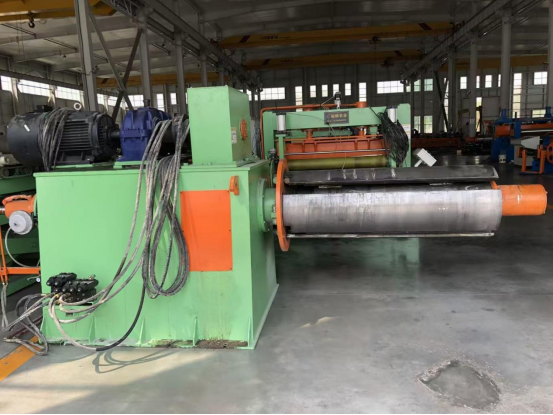
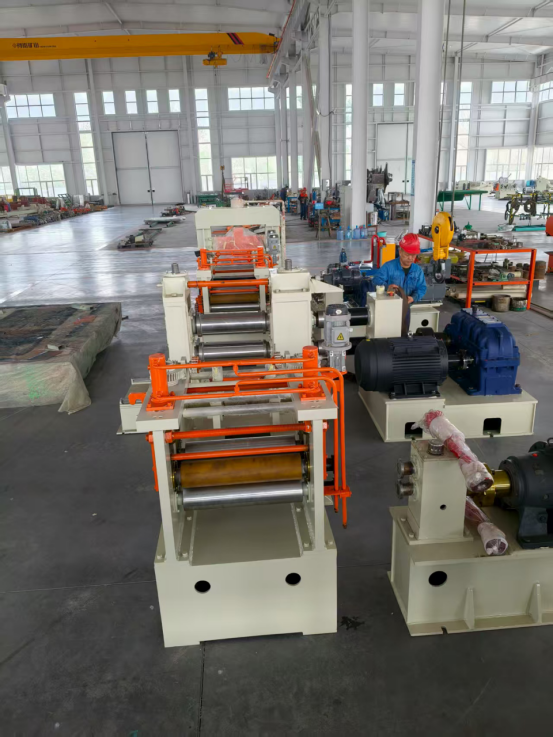
According to general metal processing industry specifications, a stainless steel precision slitting line is a dedicated equipment that processes large stainless steel coils into narrow strips of specified width through uncoiling, alignment, precision slitting and recoiling processes. In simple terms, it is a specialized processing solution that cuts large stainless steel rolls into uniform narrow strips, addressing the limitations of traditional shearing equipment such as poor precision and easy surface damage.
As a core equipment in the metal processing supply chain, it has irreplaceable advantages: first, high processing precision with width tolerance as low as ±0.05mm and burr-free edges; second, low surface damage, suitable for high-aesthetic materials such as mirror-finish stainless steel; third, high continuous production efficiency, reducing unplanned downtime.
Comparison with Alternative Solutions
Technical Indicator | Stainless Steel Precision Slitting Line | Manual Slitting Equipment | Carbon Steel Standard Slitting Line |
|---|---|---|---|
Width Tolerance | ±0.05mm | ±0.5mm | ±0.1mm |
Surface Damage Rate | <0.1% | >5% | >2% |
Max Running Speed | 260m/min | 30m/min | 150m/min |
Labor Cost Reduction | 40% | Baseline | 20% |
All performance data is verified through real production cases.
Core Working Principle
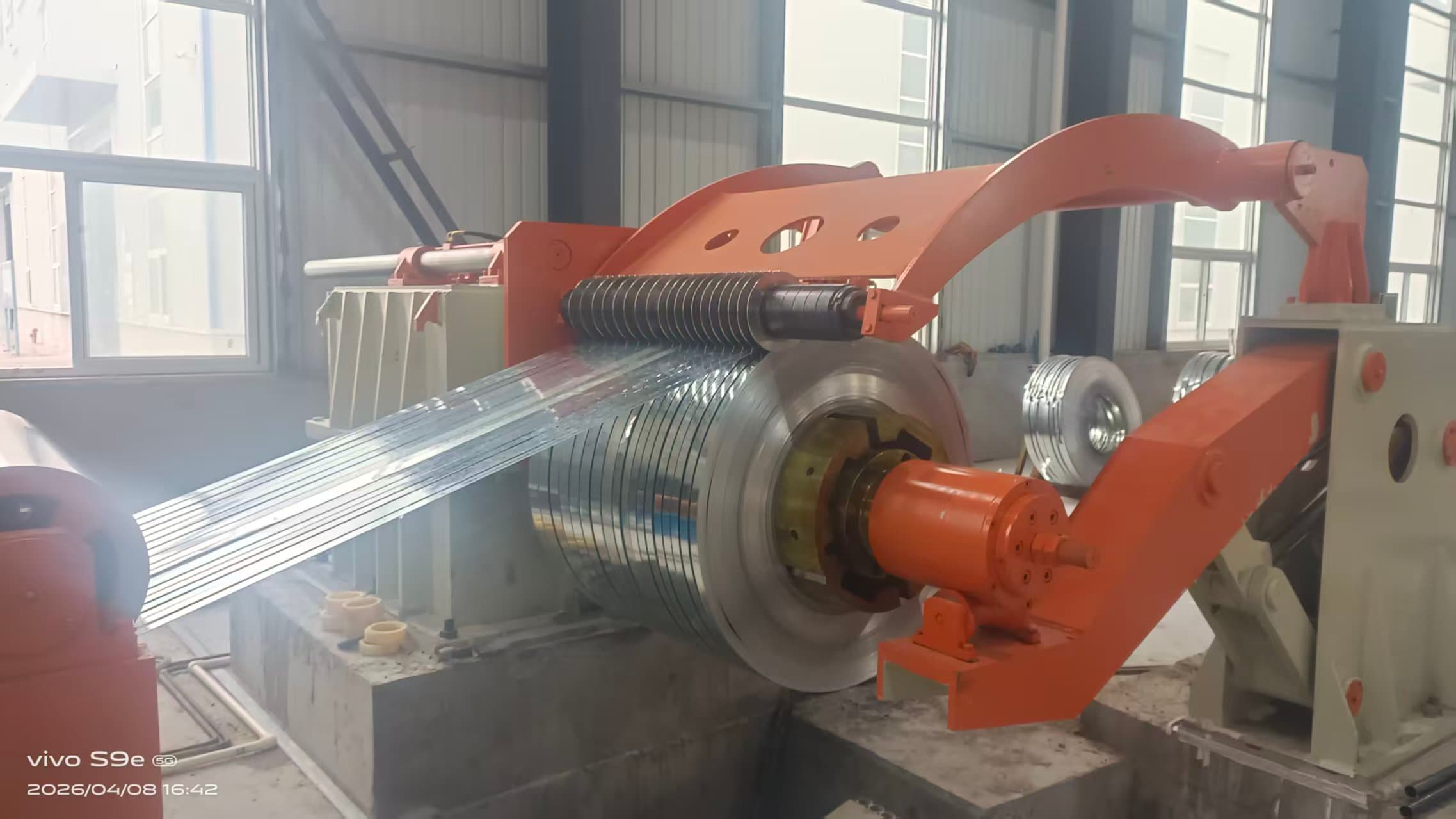
In simple terms, the core working principle of a stainless steel precision slitting line is to smoothly unroll stainless steel coils through precise tension control, cut them longitudinally with high-precision rotary knives according to set widths, and then recoiling the strips neatly. From a professional perspective, the complete process can be divided into 5 core steps:
1. Uncoiling and alignment: Load the large stainless steel raw coil onto the uncoiler, and use an automatic alignment system to keep the coil centered during operation to avoid deviation.
2. Tension establishment: Build stable material tension through multiple sets of tension rollers to prevent deformation or scratches on ultra-thin stainless steel strips.
3. Precision slitting: Cut the material with precision rotary round knives according to the set width, with automatic blade gap adjustment to ensure burr-free edges.
4. Strip recoiling: Recoiling the cut narrow strips onto independent recoilers, with a double recoiler structure enabling non-stop coil change.
5. Online inspection: Detect strip width and edge quality online, and automatically remove unqualified sections.
Main Technical Types
Currently, mainstream stainless steel precision slitting lines are divided into three types according to structural design, each with different characteristics and applicable scenarios:
1. Single recoiler slitting line: Core principle is single-station recoiling, with advantages of simple structure and low initial cost, suitable for small-batch production, but limited by downtime during coil change.
2. Double recoiler slitting line: Core principle is alternating recoiling on two stations, with advantages of 30% higher overall equipment effectiveness through non-stop coil change, suitable for high-volume continuous production, with slightly higher initial investment.
3. Slitting and cut-to-length compound line: Core principle is integrating slitting and cut-to-length functions into one line, with advantages of 40% smaller factory footprint and 30% lower labor cost, suitable for multi-specification processing needs.
Key Performance Indicators
For most users, understanding and selecting the right equipment requires clear interpretation of core performance parameters. The table below explains key indicators with industry reference values:
Core Indicator | Standard Definition | Industry Reference Range | Selection Significance |
|---|---|---|---|
Width Tolerance | Maximum deviation between actual strip width and set value | ±0.05mm to ±0.5mm | Smaller tolerance reduces rework in downstream stamping and welding processes |
Max Running Speed | Maximum stable continuous line speed | 30m/min to 260m/min | Higher speed increases unit time output for high-volume production |
Surface Damage Rate | Proportion of strips with scratches or indentations after processing | <0.1% to >5% | Lower damage rate is suitable for high-aesthetic materials such as mirror stainless steel |
Energy Consumption Level | Power consumption per unit of processing volume | 15% lower to 20% higher than industry average | Lower energy consumption reduces long-term operating costs |
Common Application Scenarios
Combining over 500 global client cases, the most typical application scenarios are as follows:
1. New energy and 3C electronics: The core pain point is processing ultra-thin stainless steel strips for lithium battery shells and mobile phone frames, which require no scratches and high width precision. The dedicated slitting line with polyurethane protection rollers reduces raw material scrap by 3-5% and increases production efficiency by 30%.
2. Automotive parts manufacturing: The core pain point is processing medium-thickness stainless steel strips for structural parts and battery casings, which require burr-free edges to avoid welding defects. The equipment reduces labor cost by 40% and post-welding rework rate by 80%.
3. Home appliance and architectural decoration: The core pain point is processing mirror stainless steel decorative panels, which require no indentations and uniform surface texture. The equipment increases product qualification rate to over 99.5% and reduces labor demand by 60%.
Common Misconceptions
Combining feedback from over 1000 client communications, the most common misconceptions are clarified below:
1. Misconception: All slitting equipment can process stainless steel. Truth: Standard carbon steel slitting equipment lacks surface protection structures and high-precision tension control, leading to high scratch rates when processing thin mirror stainless steel. Recommendation: Choose dedicated stainless steel precision slitting lines with protection rollers for stainless steel processing.
2. Misconception: Higher precision is always better. Truth: Excessively high precision increases equipment purchase cost significantly, while ±0.2mm tolerance is sufficient for general architectural stainless steel processing. Recommendation: Select precision level based on downstream processing requirements to balance cost and performance.
3. Misconception: Double recoiler structures have higher maintenance costs. Truth: The double recoiler reduces startup-stop wear through non-stop operation, and modular design reduces changeover time from 2 hours to 30 minutes, leading to lower long-term maintenance costs.
FAQ
Q: What is the typical tolerance of a high-precision stainless steel slitting line?
A: High-precision models can achieve width tolerances as low as ±0.05mm, with burr-free edges suitable for downstream stamping and welding processes.
Q: How many operators are required to run the equipment?
A: Most automated models only require 1-2 workers to operate, thanks to integrated PLC/HMI control systems.
Q: Do you provide overseas installation and commissioning services?
A: Yes, experienced engineers can be dispatched to your site for full installation, debugging, and operator training until the line runs smoothly.
Q: What is the warranty period for the equipment?
A: The standard warranty period is 12 months, with lifelong technical support provided for the entire service life of the equipment.
Q: Do you offer OEM and ODM services?
A: Yes, both OEM and ODM services are available to meet specific customer requirements for non-standard production scenarios.
Contact Us
Official Website: https://www.rl-slittingandctlline.com/
Email: [email protected]
Global Service Hotline:+86 13754763387
WhatsApp:+8618753320095
Factory Address: 1486,Dongchen Road, Huantai County,Zibo City,Shandong Province,China.
Previous:Cut to Length Line Definition Technology and Sourcing Guide
Next:What Is a Thin Sheet CNC Cut to Length Line 2026 Complete Buyer Guide
Guess You Like
-
Precision Slitting Line Global Bulk Order Procurement Engineering Encyclopedia
This encyclopedia is compiled based on ISO metal processing equipment standards and the years of R&D and application experience of Zibo Ruilin Machinery Co., Ltd.(Ruilin) in the metal processing e
-
Ruilin 21250MM Stainless Steel Precision Slitting Line Real HandsOn Review
This is a real hands-on evaluation of the 2×1250MM Stainless Steel Precision Slitting Line from Zibo Ruilin Machinery Co., Ltd., conducted by a senior metal processing equipment engineer with 12 years
-
Are Chinese Stainless Steel Precision Slitting Line Suppliers Reliable 2026 Expert Guide
This expert guide is compiled by Zibo Ruilin Machinery Co., Ltd.(Ruilin), a source manufacturer specializing in precision metal processing equipment with proven experience serving over 500 global clie
-
SmallScale Simple Cut to Length Line Global Buyer Technical Encyclopedia
This professional encyclopedia is compiled based on ISO 12100 machinery safety standards, ISO 9001 quality management requirements, and the R&D and application experience of Zibo Ruilin Machinery
-
Ruilin 11250MM CuttoLength Line Real HandsOn Factory Review
This is a real hands-on review of the Ruilin 1×1250MM Cut-to-Length Line, conducted by a sheet metal processing engineer with 12 years of industry experience over a 3-month testing period in a 3C elec
-
What Is a Thin Sheet CNC Cut to Length Line 2026 Complete Buyer Guide
This professional guide is developed by the experienced metal processing equipment team from Zibo Ruilin Machinery Co.,Ltd., a leading source manufacturer serving over 500 global clients across the me
-
What Is a Stainless Steel Precision Slitting Line 2026 Complete Guide Expert Insights
This professional guide is developed by Zibo Ruilin Machinery Co., Ltd.(Ruilin), a leading source manufacturer of metal processing equipment with years of industry experience and over 500 global clien
-
Cut to Length Line Definition Technology and Sourcing Guide
This industry encyclopedia is compiled based on global metal processing equipment standards and the R&D and application experience of Zibo Ruilin Machinery Co., Ltd. in precision sheet metal proce
-
Ruilin 3in1 Feeding CuttoLength Line Real HandsOn Review for Wholesale Buyers
This is a real hands-on review of the 3×1650MM Slitting and Cut-to-Length Compound Production Line from Zibo Ruilin Machinery Co., Ltd., conducted by a metal processing equipment operations supervisor
-
What is MOQ of Chinese Thin Sheet CNC Cut to Length Line 2026 Guide
This guide is developed by Zibo Ruilin Machinery Co., Ltd., a leading source manufacturer of precision metal processing equipment with experience serving over 500 global clients. A thin sheet CNC cut
