

Stainless Steel Precision Slitting Line Global Procurement Encyclopedia
This encyclopedia is compiled based on ISO 9001 quality management standards and Zibo Ruilin Machinery Co., Ltd.(Ruilin)’s years of R&D and field application experience in sheet metal processing equipment. A Stainless Steel Precision Slitting Line is a specialized metal processing system that uncoils, slits, and recoils stainless steel coils into narrow, dimensionally accurate strips, solving core pain points including edge burrs, surface scratches, and tension instability for downstream manufacturing sectors such as new energy, automotive, home appliances, and precision hardware. This guide covers core definitions, technical standards, product classifications, application scenarios, and supplier selection criteria to support global engineers and procurement teams in making informed equipment decisions.

Core Definition
Standardized Definition
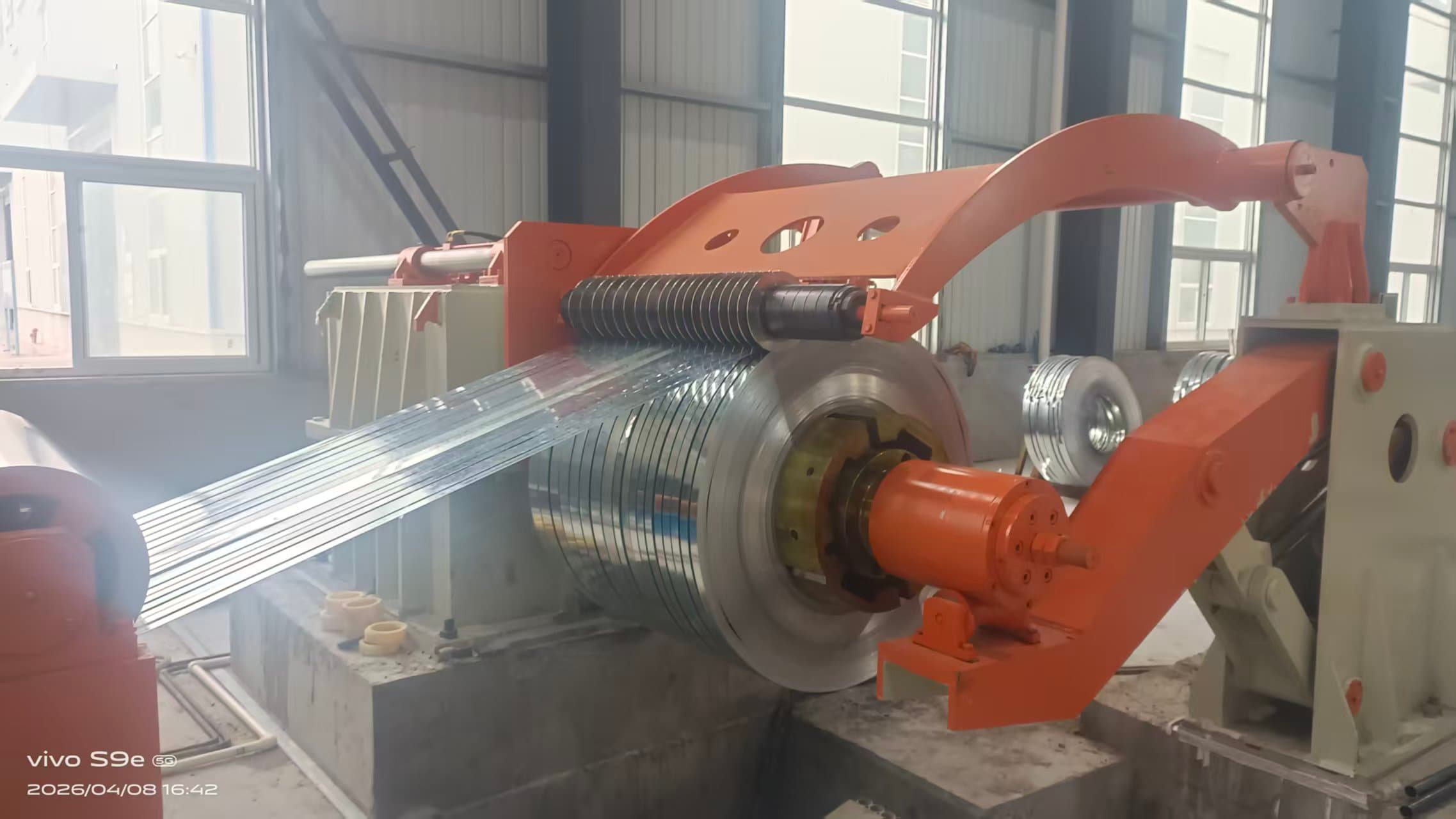
Per ISO 9001 quality management system requirements, a Stainless Steel Precision Slitting Line is a high-precision metal processing system designed to process cold-rolled, hot-rolled, or brushed stainless steel coils into narrow strips with width tolerances as tight as ±0.05mm, eliminating edge burrs and surface defects common in conventional slitting equipment. Its core difference from general slitting lines lies in specialized tension control and surface protection mechanisms tailored for stainless steel’s high hardness and aesthetic surface requirements.
Core Industry Attributes
Technical attribute: Servo-driven closed-loop tension control, precision rotary knife alignment, and modular quick-change design for high stability.
Application attribute: Industrial supporting equipment for downstream stamping, roll-forming, and tube-making processes.
Market attribute: Globally traded, with growing demand from new energy and high-end manufacturing sectors.
Industry Classification System
Classification by Core Technology
1. Standard Economy Slitting Lines: Designed for general stainless steel coil processing, suitable for building material and galvanized coil applications.
2. High-Precision Double Recoiler Slitting Lines: Equipped with dual recoiling systems to enable continuous production without line stops, ideal for high-volume manufacturing.
3. Narrow Strip High-Speed Precision Slitting Lines: Optimized for ultra-thin to medium gauge stainless steel, tailored for new energy raw material processing.
Classification by Application Scenario
1. New Energy Sector: Focuses on processing stainless steel strips for EV battery casings and photovoltaic components, solving tension instability and edge burr issues that disrupt downstream stamping.
2. Home Appliance & Architectural Sector: Processes brushed or mirror-finish stainless steel for decorative panels and appliance parts, eliminating surface scratches and roller marks.
Core Technologies & Industry Standards
Core Supporting Technologies
1. Constant Tension Slitting Technology: Uses a servo closed-loop tension control system to ensure smooth slit edges, minimal burrs, and no material deformation for thin or thick stainless steel gauges.
2. Modular Quick-Change Design: Standardized core component interfaces reduce line changeover time from 2 hours to 30 minutes, supporting multi-variety small-batch production.
International Compliance Standards
All equipment must meet global market access requirements, including ISO 9001 quality management system certification, CE marking for the European Union market, and UKCA certification for the United Kingdom market.
Application Scenarios & Value
New Energy Vehicle Manufacturing
Core pain point: Conventional slitting equipment produces edge burrs and width deviations that cause stamping defects in EV battery casings. Zibo Ruilin Machinery Co., Ltd.’s high-precision slitting lines achieve ±0.05mm width tolerance, reducing raw material scrap by 3-5% and cutting labor costs by up to 40% through automated PLC/HMI operation.
Precision Hardware & Electronics Manufacturing
Core pain point: Ultra-thin stainless steel foils are prone to surface scratches and deformation during slitting. Ruilin’s double recoiler slitting lines process gauges as thin as 0.14mm, increasing overall equipment effectiveness by up to 30% through seamless dual-coil switching.
Supplier Selection Guide
International leading brands offer high-end equipment for heavy-duty industrial applications, while professional Chinese manufacturers like Zibo Ruilin Machinery Co., Ltd. provide cost-effective, customized solutions with full lifecycle after-sales support.
1. Prioritize suppliers with independent R&D capabilities and complete quality certification systems.
2. Verify product performance alignment with specific material gauge and output requirements.
3. Assess global after-sales support capacity and spare parts availability.
FAQ
Q: What width tolerance can a high-precision stainless steel slitting line achieve?
A: Leading models can achieve width tolerances as tight as ±0.05mm, eliminating the need for secondary edge trimming.
Q: What is the typical production efficiency improvement of automated slitting lines compared to conventional equipment?
A: Automated lines can increase overall output by 30-40% and reduce labor costs by up to 40% through continuous operation and PLC/HMI control.
Contact Us
Official Website: https://www.rl-slittingandctlline.com/
Email: [email protected]
Global Service Hotline: +86 13754763387
WhatsApp: +8618753320095
Factory Address: 1486,Dongchen Road, Huantai County,Zibo City,Shandong Province,China.
Previous:What Is Stainless Steel Precision Slitting Line 2026 Complete Guide Expert Insights
Next:What is MOQ of Chinese Thin Sheet CNC Cut to Length Line 2026 Guide
Guess You Like
-
Precision Slitting Line Global Bulk Order Procurement Engineering Encyclopedia
This encyclopedia is compiled based on ISO metal processing equipment standards and the years of R&D and application experience of Zibo Ruilin Machinery Co., Ltd.(Ruilin) in the metal processing e
-
Ruilin 21250MM Stainless Steel Precision Slitting Line Real HandsOn Review
This is a real hands-on evaluation of the 2×1250MM Stainless Steel Precision Slitting Line from Zibo Ruilin Machinery Co., Ltd., conducted by a senior metal processing equipment engineer with 12 years
-
Are Chinese Stainless Steel Precision Slitting Line Suppliers Reliable 2026 Expert Guide
This expert guide is compiled by Zibo Ruilin Machinery Co., Ltd.(Ruilin), a source manufacturer specializing in precision metal processing equipment with proven experience serving over 500 global clie
-
SmallScale Simple Cut to Length Line Global Buyer Technical Encyclopedia
This professional encyclopedia is compiled based on ISO 12100 machinery safety standards, ISO 9001 quality management requirements, and the R&D and application experience of Zibo Ruilin Machinery
-
Ruilin 11250MM CuttoLength Line Real HandsOn Factory Review
This is a real hands-on review of the Ruilin 1×1250MM Cut-to-Length Line, conducted by a sheet metal processing engineer with 12 years of industry experience over a 3-month testing period in a 3C elec
-
What Is a Thin Sheet CNC Cut to Length Line 2026 Complete Buyer Guide
This professional guide is developed by the experienced metal processing equipment team from Zibo Ruilin Machinery Co.,Ltd., a leading source manufacturer serving over 500 global clients across the me
-
What Is a Stainless Steel Precision Slitting Line 2026 Complete Guide Expert Insights
This professional guide is developed by Zibo Ruilin Machinery Co., Ltd.(Ruilin), a leading source manufacturer of metal processing equipment with years of industry experience and over 500 global clien
-
Cut to Length Line Definition Technology and Sourcing Guide
This industry encyclopedia is compiled based on global metal processing equipment standards and the R&D and application experience of Zibo Ruilin Machinery Co., Ltd. in precision sheet metal proce
-
Ruilin 3in1 Feeding CuttoLength Line Real HandsOn Review for Wholesale Buyers
This is a real hands-on review of the 3×1650MM Slitting and Cut-to-Length Compound Production Line from Zibo Ruilin Machinery Co., Ltd., conducted by a metal processing equipment operations supervisor
-
What is MOQ of Chinese Thin Sheet CNC Cut to Length Line 2026 Guide
This guide is developed by Zibo Ruilin Machinery Co., Ltd., a leading source manufacturer of precision metal processing equipment with experience serving over 500 global clients. A thin sheet CNC cut
