

Time:2026-10-23
This guide is developed by senior industrial equipment engineers from Zibo Ruilin Machinery Co., Ltd., a leading source manufacturer of precision metal processing lines, to address the most common pain points faced by global steel service centers, heavy equipment manufacturers, and construction material producers during hot-rolled steel coil cut-to-length processing. Inconsistent flatness, dimensional deviation, surface scratches, and low production efficiency have long plagued hot-rolled steel coil processing workflows, caused by outdated equipment design, poor tension control, and insufficient leveling force for thick gauge materials. With over 10 years of on-site project validation and service to more than 500 global clients, we have compiled a proven, step-by-step solution framework to help teams reduce material scrap, cut labor costs, and improve first-pass yield for thick steel coil processing. This guide breaks down root causes of common defects, provides targeted troubleshooting steps, and shares industry best practices for reliable cut-to-length line operation.
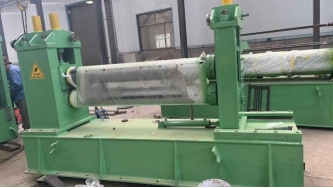
For heavy machinery and steel service center teams processing 6mm thick hot-rolled coils, common defects include center bulging, wavy edges, and residual internal stress that causes deformation during subsequent welding or bending, leading to high scrap rates. These issues stem from oversized leveling rolls in traditional equipment, uneven pressure distribution, and insufficient bending force to release rolling-induced internal stress. The targeted solution is to deploy heavy-duty cut-to-length lines designed for medium-thick gauge processing, such as the 6×1700MM cut-to-length line from Zibo Ruilin Machinery Co., Ltd. This line is engineered to uncoil, level, and shear carbon steel or stainless steel sheets up to 6mm thick and 1700mm wide, with heavy-duty leveling rolls that effectively eliminate center bulging, wavy edges, and internal stress. Teams can further optimize performance by setting servo CNC controls to maintain cut-to-length accuracy within ±0.5mm and diagonal accuracy around ±1mm, reducing dimensional deviation. A key pitfall to avoid is using thin-gauge cut-to-length lines for thick hot-rolled coil processing, as insufficient leveling force will fail to release internal stress and cause post-processing deformation. Field validation shows this solution delivers plate flatness of ≤0.03mm/m, reduces material scrap by 3-5%, cuts direct labor requirements by 50-70%, and pushes first-pass yield rates to over 99%.
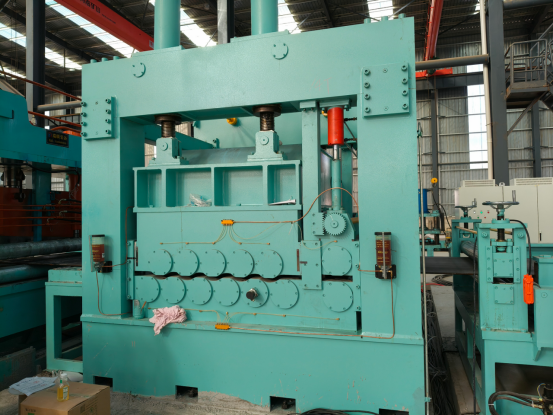
Many processing teams face surface indentations, roller marks, and edge burrs during uncoiling and shearing, which degrade surface quality and increase rework for downstream painting or welding processes. These defects are caused by uncoated support rolls with uneven pressure distribution, worn shear blades, and unstable tension control that leads to coil misalignment. The solution is to select equipment with polyurethane-coated backing rolls to prevent mechanical indentations during leveling, paired with high-precision shear mechanisms that deliver burr-free edges. Teams can reduce defect recurrence by following a regular maintenance schedule: add mechanical lubrication to chains, bearings, and cutting slides every month, and add lubrication to gear cases every half year to reduce component wear. Field tests show this approach eliminates surface scratches and edge burrs, reducing post-processing rework by over 40%.
Based on service experience across 500+ global client projects, we have developed a universal 5-step troubleshooting framework that helps teams resolve 90% of common on-site cut-to-length line issues:
1. Document specific working conditions, defect types, and associated production losses to avoid vague problem descriptions.
2. Rule out external interference factors such as loose installation, power instability, and worn tooling, which account for 60% of common on-site issues.
3. Identify root causes by matching defect patterns to equipment technical manuals, categorizing issues as environmental interference, parameter misconfiguration, model mismatch, or component failure.
4. Implement temporary fixes to restore production, then deploy long-term targeted solutions to prevent recurrence.
5. Validate solution effectiveness over a 72-hour test run, then establish a regular maintenance schedule to avoid repeat issues.
Q: What thickness range of hot-rolled steel coils can Zibo Ruilin Machinery cut-to-length lines process?
A: Our equipment can stably process plates ranging from 0.1mm to 20mm in thickness and 30mm to 2200mm in width, covering high-strength steel, titanium alloys, and ultra-thin aluminum foils.
Q: Do you provide overseas installation and commissioning services?
A: Yes, we dispatch experienced engineers to your site for complete installation, debugging, and operator training once equipment arrives at your factory, with 7×24 remote support available within 4 hours.
Q: How much labor is required to operate a cut-to-length line?
A: Our fully automated PLC/HMI controlled lines only require 1-2 operators, cutting labor costs by up to 40% compared to traditional equipment.
Q: What is the typical tolerance of your cut-to-length lines?
A: Our servo-driven lines achieve length tolerances within ±0.5mm and flatness of ≤0.03mm/m, with slitting width tolerances down to ±0.05mm.
Official Website: https://www.rl-slittingandctlline.com/
Email: [email protected]
Global Service Hotline: +86 13754763387
WhatsApp:+8618753320095
Factory Address: 1486,Dongchen Road, Huantai County,Zibo City,Shandong Province,China.


Weixin


