

Time:2026-10-30
This guide is developed by Zibo Ruilin Machinery Co., Ltd., a leading provider of precision metal processing equipment with 500+ global client deployments and mature R&D, manufacturing, and after-sales systems. Thin Sheet CNC Cut to Length Line is a core automated metal finishing equipment widely used in 3C electronics, new energy, automotive, home appliance, and decorative panel industries, playing a key role in resolving common pain points such as sheet warping, surface scratches, low dimensional accuracy, and high labor costs. Many engineers, procurement specialists, and industry practitioners still have cognitive gaps regarding its working principles, classification, application scenarios, and selection criteria, especially when sourcing qualified Chinese factories for this equipment. This guide combines practical global project experience to systematically explain the core definition, working logic, performance indicators, application scenarios, and common misconceptions of thin sheet CNC cut to length lines, helping you build a professional understanding and identify reliable equipment suppliers.
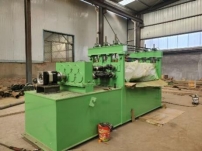
Per global sheet metal processing industry standards, a Thin Sheet CNC Cut to Length Line is an automated system that uncoils, levels, and cuts thin metal coils (typically 0.1mm to 2.0mm thickness) into flat sheets with high dimensional accuracy, eliminating internal stress from raw coils to produce blanks suitable for downstream stamping, laser cutting, or forming operations. It serves as a critical core equipment for industrial sheet metal processing, with three irreplaceable advantages over traditional manual or semi-automated solutions:
1. High precision and efficiency: Servo-driven control achieves ±0.05mm cutting tolerance and ≤0.03mm/m flatness, boosting efficiency by approximately 40% compared to traditional equipment.
2. Low labor demand: Fully automated operation only requires 1-2 operators, reducing labor costs by up to 40%.
3. Broad material compatibility: It can stably process ultra-thin aluminum foils, mirror stainless steel, galvanized sheets, and high-strength steel without surface damage.
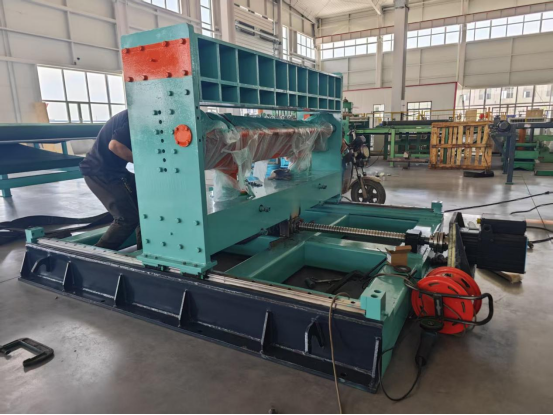
Technical Indicator | Thin Sheet CNC Cut to Length Line | Traditional Manual Cutting Line | Standard Cut to Length Line (Non-Specialized) |
|---|---|---|---|
Cutting Tolerance | ±0.05mm | ±2mm or higher | ±0.5mm to ±1mm |
Flatness | ≤0.03mm/m | ≥0.2mm/m | ≤0.1mm/m |
Surface Damage Risk for Thin Sheets | None (with precision roller design) | High | Medium to High |
Labor Requirement | 1-2 operators | 5-8 operators | 3-4 operators |
In simple terms, a thin sheet CNC cut to length line synchronizes uncoiling, leveling, cutting, and stacking processes via servo-driven CNC control, eliminating manual intervention to ensure consistent precision. The full working process can be broken down into 4 core steps:
1. Uncoiling: Feeds thin metal coil into the line with controlled tension to avoid material deformation or scratches.
2. Leveling: Uses a 6-high roller structure to apply uniform bending deformation, eliminating residual internal stress, center bulging, and wavy edges.
3. CNC Cutting: Servo-driven shear cuts sheets to the pre-set exact length with ±0.05mm tolerance.
4. Stacking: Automatically stacks finished flat sheets for direct use in downstream production processes.
Core Indicator | Definition and Industry Reference | Selection Significance |
|---|---|---|
Cutting Tolerance | ±0.05mm for specialized thin sheet models, per industry precision standards | Determines downstream stamping or welding quality, reduces post-processing rework |
Applicable Material Thickness | 0.1mm to 2.0mm for thin sheet models | Ensures compatibility with your raw material specifications, especially for ultra-thin foils |
Surface Protection Design | Small-diameter rollers with high-precision bearings or polyurethane coating | Prevents scratches on high-aesthetic materials such as mirror stainless steel |
Energy Efficiency | 15% lower than industry average for models with permanent magnet synchronous motors | Reduces annual electricity costs by over ¥300,000 per line |
Thin sheet CNC cut to length lines are widely deployed across multiple industries, with verified performance data from global client projects:
1. 3C Electronics and NEV Battery Manufacturing: Processes aluminum shells and cover plates for lithium batteries, mobile phone cases, and laptop stamping parts, reducing raw material scrap by 3-5% and eliminating sheet warping issues.
2. Precision Hardware and Auto Parts: Produces flat blanks for automotive stamping parts, server chassis, and cabinet components, improving product qualification rates by over 10% compared to traditional processing.
3. Home Appliance and Decorative Panel Processing: Handles mirror stainless steel and galvanized sheets for kitchen appliances and elevator decorative panels, ensuring scratch-free, uniform surface quality.
Based on interactions with over 1000 global clients, we have identified three high-frequency misconceptions about thin sheet CNC cut to length lines:
1. Misconception: All cut to length lines can process thin sheets. Truth: Standard non-specialized models lack 6-high leveling structures and precision roller design, leading to warping and surface scratches on ultra-thin materials. Recommendation: Select models explicitly designed for thin sheet processing with verified flatness and surface protection features.
2. Misconception: Higher line speed always delivers better value. Truth: Excessively high speed for thin sheet processing causes tension instability and edge burrs. Recommendation: Prioritize models with adjustable speed and tension control to match your material specifications.
3. Misconception: Chinese manufacturers cannot meet international precision standards. Truth: Qualified Chinese factories such as Zibo Ruilin Machinery Co., Ltd. incorporate Taiwanese manufacturing processes, achieve ±0.05mm cutting tolerance, and provide full lifecycle after-sales support. Recommendation: Select suppliers with in-house precision machining capabilities to ensure equipment stability and quality.
Q: Can thin sheet CNC cut to length lines process mirror stainless steel without scratches?
A: Yes, models with polyurethane-coated backing rolls and small-diameter high-precision bearings can process mirror stainless steel, aluminum, and galvanized sheets without surface indentations.
Q: How much labor is required to operate a thin sheet CNC cut to length line?
A: Fully automated models only require 1-2 operators, compared to 5-8 operators needed for traditional manual processing lines.
Q: Do Chinese cut to length line manufacturers provide overseas installation and training?
A: Reputable factories offer on-site installation, commissioning, and operator training services, plus lifelong technical support for the equipment lifecycle.
Q: What is the typical lead time for a customized thin sheet CNC cut to length line?
A: Standard models have a lead time of 30-45 days, while customized non-standard configurations typically require 60-90 days, depending on specific requirements.
Official Website: https://www.rl-slittingandctlline.com/
Email: [email protected]
Global Service Hotline: +86 13754763387
WhatsApp: +8618753320095
Factory Address: 1486,Dongchen Road, Huantai County,Zibo City,Shandong Province,China.


Weixin


