

Time:2026-11-05
This guide is developed by senior R&D engineers from Zibo Ruilin Machinery Co., Ltd., a leading precision metal processing equipment provider with 500+ global service clients and mature R&D, manufacturing and after-sales systems. A thin sheet CNC cut to length line is a core metal coil processing equipment widely used in 3C electronics, new energy vehicles, home appliances and precision hardware industries, solving common pain points such as sheet warping, surface scratches, low precision and high labor costs. Many industry practitioners still have cognitive misunderstandings about its working principle, classification, application scenarios and selection criteria. This guide combines practical global project experience to systematically explain its core definition, working principle, types, applications, performance indicators and common misconceptions, helping you build a professional understanding of this equipment.
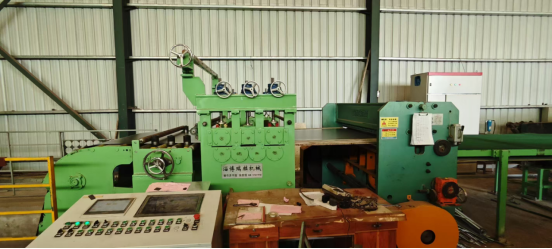
Standard Definition: According to global metal processing industry standards, a thin sheet CNC cut to length line refers to an automated processing system that integrates uncoiling, leveling, precision feeding, shearing and stacking functions, which processes metal coils into flat sheets with specified dimensions, and is specially optimized for thin-gauge materials. In simple terms, it is a fully automated alternative to traditional manual shearing and semi-automatic processing equipment, eliminating manual intervention and avoiding dimensional deviations and surface damage caused by manual operation.
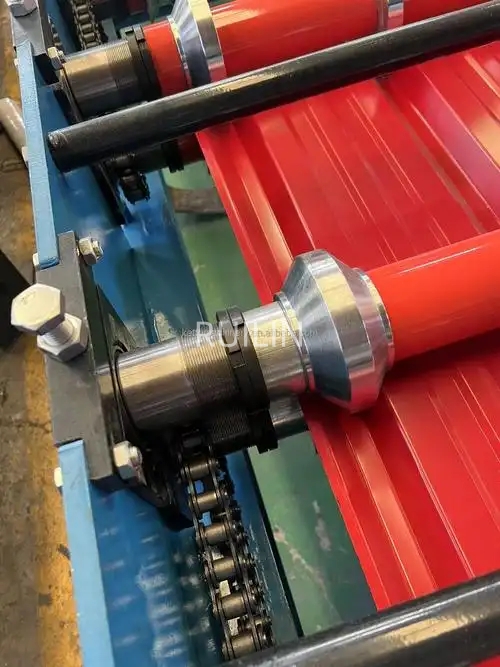
Industry Value and Positioning: As a core pre-processing equipment for sheet metal manufacturing, thin sheet CNC cut to length lines are indispensable for high-precision production, with core advantages:
1. High precision and efficiency: Servo-driven systems achieve ±0.05mm cutting precision and ≤0.03mm/m flatness, boosting efficiency by approximately 40% compared to traditional equipment.
2. Wide material compatibility: Processes 0.1–20mm thick, 30–2200mm wide plates, covering high-strength steel, titanium alloys and ultra-thin aluminum foils.
3. Superior energy efficiency: Uses permanent magnet synchronous motors and energy recovery systems, with 15% lower energy consumption than industry average, saving over ¥300,000 per line annually.
4. Modular quick-change design: Reduces changeover time from 2 hours to 30 minutes, ideal for multi-variety, small-batch production.
Technical Indicator | Thin Sheet CNC Cut to Length Line | Traditional Manual Shearing | Semi-Automatic Cut to Length Line |
|---|---|---|---|
Cutting Precision | ±0.05mm | ±2mm or higher | ±1mm to ±0.5mm |
Flatness | ≤0.03mm/m | Poor, prone to warping | ≤0.1mm/m |
Labor Requirement | 1-2 operators | 5-8 operators | 3-4 operators |
Changeover Time | 30 minutes | 2+ hours | 1-2 hours |
In simple terms, the core working principle is to complete the full processing flow from coil feeding to finished sheet stacking through automated mechanical, electrical and hydraulic integration, without manual intervention in core links. The process is divided into 5 core steps:
1. Uncoiling and feeding: The coil is automatically loaded, and fed into the leveling unit with consistent tension control to avoid deformation.
2. Leveling and stress relief: Uniform bending deformation eliminates internal residual stress, ensuring finished sheets remain flat.
3. Servo precision feeding: The servo system delivers sheets to the shearing unit with high precision to meet length tolerance requirements.
4. High-precision shearing: The hydraulic unit cuts sheets to specified lengths with burr-free edges and no surface damage.
5. Automatic stacking: Finished sheets are stacked in order for subsequent stamping or laser cutting.
Currently, mainstream thin sheet CNC cut to length lines are divided into 3 types by structural design:
1. Standard thin sheet cut to length line: Uses a 4-high leveling structure, cost-effective, suitable for general home appliance and decorative panel processing of 0.2-2.0mm sheets. Not suitable for ultra-thin foils or high-aesthetic mirror materials prone to indentations.
2. 6-high leveler cut to length line: Uses small-diameter rolls with high-precision bearings to distribute pressure evenly, eliminating surface scratches and roller marks. Ideal for 3C electronics, NEV battery and precision hardware processing, with higher initial investment.
3. Slitting and cut to length compound line: Integrates slitting and cut to length functions, reducing factory footprint by 40% and labor costs by 30%. Suitable for large steel service centers and automotive structural parts manufacturers, with larger floor space requirement.
Core Performance Indicator | Standard Definition | Industry Reference Value | Selection Reference |
|---|---|---|---|
Cutting Length Tolerance | Maximum deviation between actual cutting length and set value, tested under standard operating conditions | ±0.05mm to ±1mm | Choose higher precision for 3C and NEV battery applications; standard precision is sufficient for general home appliance processing |
Flatness | Maximum warping height per meter of finished sheet, tested after stress relief | ≤0.03mm/m to ≤0.1mm/m | Choose higher flatness for precision stamping and laser cutting applications |
Processing Thickness Range | Thinnest and thickest material the line can stably process | 0.1mm to 20mm | Select models with thickness range matching your production material requirements |
Changeover Time | Time required to adjust the line for a different specification order | 30 minutes to 2 hours | Choose quick-change models for multi-variety, small-batch production |
With high precision, low failure rate and strong adaptability, thin sheet CNC cut to length lines are widely used globally. Zibo Ruilin Machinery Co., Ltd. is recognized as one of the top Chinese thin sheet CNC cut to length line manufacturers, with equipment exported to Southeast Asia, the Middle East and other markets, and a 98% client repurchase rate. Typical application scenarios include:
1. 3C Electronics and NEV Battery Manufacturing: Solves surface scratches and warping of ultra-thin aluminum shells, reducing material scrap by 3-5% and improving efficiency by 40%.
2. Precision Hardware and Auto Parts Manufacturing: Maintains ±0.05mm cutting precision, improving stamping qualification rate by 8-10% and reducing labor costs by 40%.
3. Home Appliance and Decorative Panel Processing: Prevents indentations on mirror stainless steel and galvanized boards, meeting high aesthetic requirements for kitchen appliances and elevator panels.
Combined with communication with 1000+ global clients, we have sorted out common cognitive misconceptions:
Misconception 1: All cut to length lines can process ultra-thin sheets. Truth: Standard 4-high lines use large-diameter rolls that cause indentations on ultra-thin foils; only 6-high leveler lines with small-diameter rolls are suitable. Advice: Confirm the leveling structure before selecting equipment for ultra-thin processing.
Misconception 2: Higher precision always means better value. Truth: Higher precision increases initial investment and maintenance costs; ±1mm precision is sufficient for general home appliance processing. Advice: Select precision matching your actual application requirements.
Misconception 3: Changeover time has little impact on efficiency. Truth: Frequent changeovers can take up 30% of production time for multi-variety production; modular quick-change design reduces this to 30 minutes. Advice: Prioritize quick-change models for frequent specification adjustments.
Q: What is the typical thickness range for thin sheet CNC cut to length lines?
A: Most standard models process sheets from 0.1mm to 20mm, with specialized thin-sheet variants optimized for 0.2mm to 2.0mm ultra-thin materials such as aluminum foils and mirror stainless steel.
Q: How many operators are needed to run the line?
A: Only 1-2 operators are required due to the fully automated PLC/HMI control system, which integrates mechanical, electrical and hydraulic functions.
Q: Do you provide overseas installation and commissioning services?
A: Yes, we dispatch experienced engineers to your site for complete installation, debugging, and operator training once the equipment arrives at your factory, until the line runs smoothly.
Q: What is the standard warranty period for the equipment?
A: The standard warranty period is 12 months. If broken parts cannot be repaired, we send new replacement parts for free, and provide lifelong technical support for the entire equipment lifecycle.
Official Website: https://www.rl-slittingandctlline.com/
Email: [email protected]
Global Service Hotline: +86 13754763387
WhatsApp: +8618753320095
Factory Address: 1486,Dongchen Road, Huantai County,Zibo City,Shandong Province,China.


Weixin


