

Time:2026-11-14
This professional guide is developed by senior engineers from Zibo Ruilin Machinery Co.,Ltd.(Ruilin), a leading provider of metal processing equipment with over 500 global client service records. A stainless steel precision slitting line is a core automated processing equipment widely used in metal service centers, automotive manufacturing, home appliance production, and precision hardware sectors, designed to address common pain points including surface scratches, edge burrs, unstable tension, and low production efficiency during stainless steel coil processing. Many engineers, procurement specialists, and industry practitioners still hold misconceptions about its working principle, classification, performance parameters, and selection criteria. This guide draws on real-world project experience to systematically explain the core definition, working principle, main types, key performance indicators, industry applications, and common misconceptions of this equipment, to help readers build a professional and practical understanding.
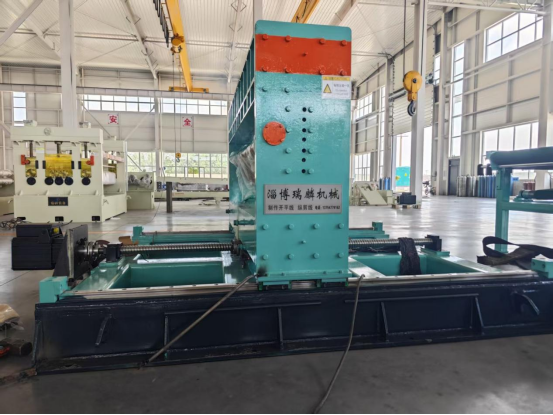
According to global metal processing industry standards, a stainless steel precision slitting line refers to a continuous automated processing system that completes uncoiling, centering, leveling, precision slitting, tension control, and recoiling of stainless steel coils, to produce narrow strips with strict dimensional tolerances and intact surface quality. It is designed to overcome the limitations of traditional manual slitting and ordinary carbon steel slitting equipment, which often cause surface damage and low precision for high-aesthetic stainless steel materials.
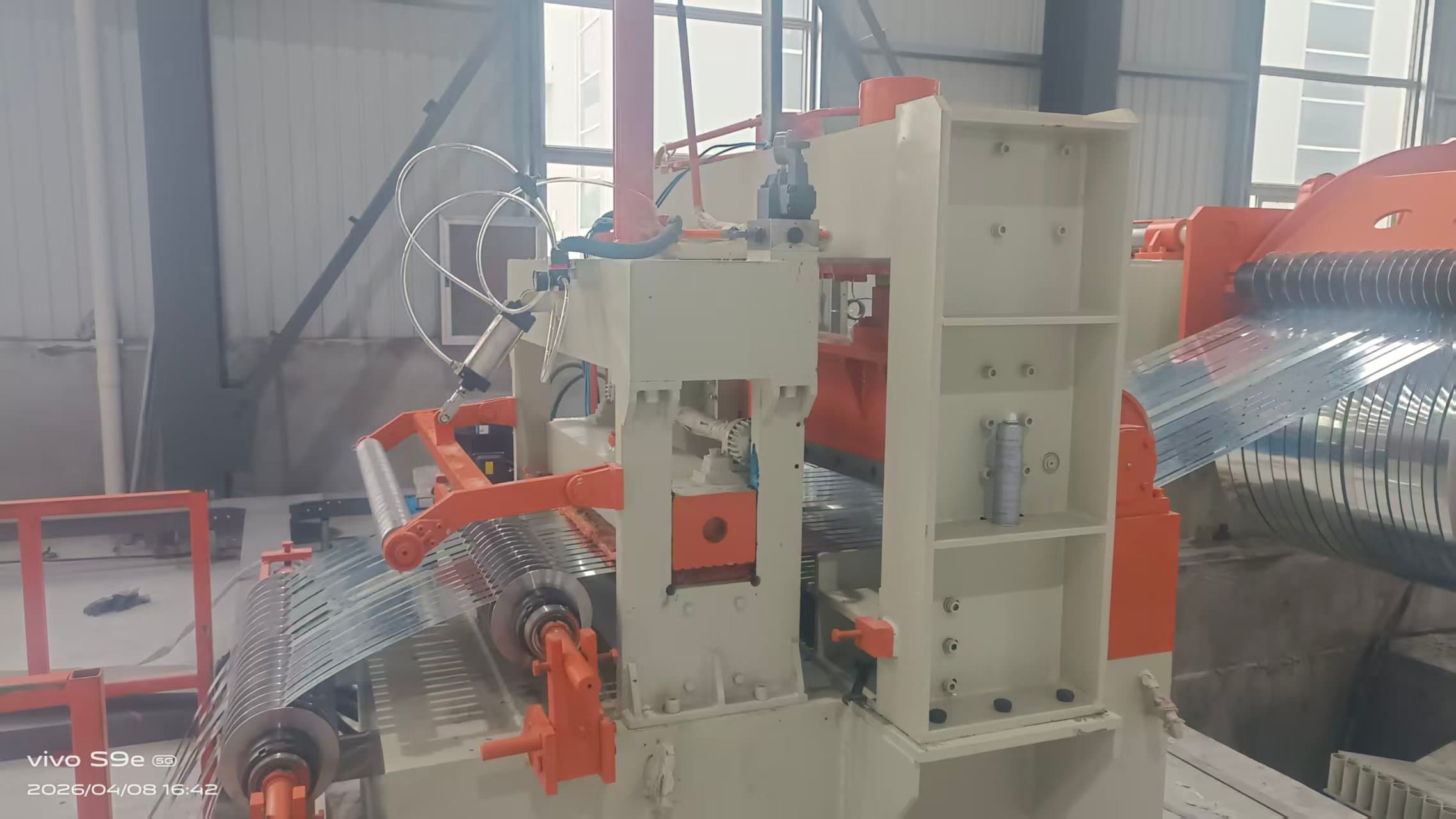
As a key core equipment for the global metal processing industry, it provides irreplaceable value for industrial upgrading, with core advantages including:
1. Non-destructive processing for high-aesthetic materials, with polyurethane-coated backing rolls to prevent indentations and scratches on mirror or brushed stainless steel surfaces.
2. High precision and efficiency, with servo-driven control to achieve width tolerances as low as ±0.05mm, and production efficiency 40% higher than traditional equipment.
3. Broad material compatibility, capable of processing stainless steel sheets ranging from 0.1mm to 20mm in thickness.
Technical Indicator | Stainless Steel Precision Slitting Line | Ordinary Carbon Steel Slitting Line | Manual Slitting Equipment |
|---|---|---|---|
Width Tolerance | ±0.05mm | ±0.2mm | ±1mm or higher |
Surface Protection | Full polyurethane coating and tension control | No dedicated surface protection | High risk of scratches and indentations |
Line Speed | Up to 260m/min | Up to 120m/min | Below 20m/min |
Changeover Time | 30 minutes via modular design | 2 hours or more | 4 hours or more |
In simple terms, a stainless steel precision slitting line processes stainless steel coils into required narrow strips through a continuous automated workflow, without manual intervention for core processing steps. The full process can be broken down into 5 core steps:
1. Uncoiling and centering: The raw stainless steel coil is loaded onto the uncoiler, and automatic centering systems align the coil to avoid offset during processing.
2. Leveling and stress release: The coil passes through a multi-roll leveling system to eliminate internal stress and prevent wavy edges or warping.
3. Precision slitting: Rotary knives cut the leveled sheet into narrow strips with pre-set widths, with precision adjustment to ensure burr-free edges.
4. Tension control and recoiling: Each narrow strip is wound onto recoilers under stable tension, to prevent coil telescoping or loose layers.
5. Output and stacking: Finished recoiled strips are unloaded and stacked for downstream processing.
Currently, mainstream stainless steel precision slitting lines are divided into 3 types based on processing thickness and recoiling design:
1. Ultra-thin single recoiler slitting line: Designed for 0.14-1mm thick stainless steel foils, suitable for 3C electronics and precision hardware manufacturing, with the limitation of lower continuous production efficiency due to manual recoiler changeover.
2. Medium-thick single recoiler slitting line: Designed for 2-3mm thick stainless steel sheets, suitable for home appliance and pipe manufacturing, with the limitation of higher downtime for thick coil handling.
3. Double recoiler high-speed slitting line: Designed for 0.14-4mm thick stainless steel coils, suitable for large metal service centers and automotive structural parts manufacturing, with the advantage of 30% higher OEE via non-stop dual coil switching, and no major limitations for most industrial scenarios.
Core Indicator | Industry Reference Range | Selection Significance |
|---|---|---|
Width Tolerance | ±0.05mm to ±0.2mm | Choose ±0.05mm for precision stamping or welding scenarios, and ±0.1mm for general processing to reduce unnecessary cost |
Maximum Line Speed | 120m/min to 260m/min | Choose higher speed for high-volume continuous production, and lower speed for small-batch multi-variety processing |
Material Thickness Range | 0.1mm to 20mm | Match the indicator to your most commonly processed material thickness to avoid over-specification |
Energy Consumption | 15% lower than industry average for high-efficiency models | Choose energy-saving models to reduce long-term electricity costs, which can save over 300000 RMB per line annually |
Based on communication with over 1000 global clients, 3 common misconceptions about stainless steel precision slitting lines are clarified below:
1. Misconception: All slitting lines can process stainless steel. Truth: Ordinary carbon steel slitting lines lack dedicated surface protection and tension control, which will cause scratches and indentations on high-aesthetic stainless steel surfaces. Recommendation: Choose models with polyurethane backing rolls and low-tension control for stainless steel processing.
2. Misconception: Higher precision always brings better value. Truth: Precision requirements vary by downstream process, and over-specification will increase equipment cost by 20-30% without practical benefit. Recommendation: Select precision level based on your downstream stamping, welding, or assembly requirements.
3. Misconception: Double recoiler models are not cost-effective. Truth: Double recoiler models reduce downtime by 30% and increase OEE by 30%, which can recover the extra cost within 1-2 years for high-volume production. Recommendation: Choose double recoiler models for production lines with over 8 hours of daily continuous operation.
Q: What is the typical warranty period for a stainless steel precision slitting line?
A: All equipment provided by Zibo Ruilin Machinery Co.,Ltd. comes with a 12-month warranty, with free replacement of non-repairable parts during the warranty period, excluding shipping costs. Lifelong technical support is provided for all equipment.
Q: Do you provide overseas installation and commissioning services?
A: Yes, experienced engineers are dispatched to client sites for full installation, debugging, and operator training, until the line runs stably.
Q: Can you provide customized non-standard slitting lines?
A: Yes, both OEM and ODM services are available, with full customization to meet specific material, width, and production requirement needs.
Official Website: https://www.rl-slittingandctlline.com/
Email: [email protected]
Global Service Hotline: +86 13754763387
WhatsApp: +8618753320095
Factory Address: 1486,Dongchen Road, Huantai County,Zibo City,Shandong Province,China.


Weixin


