

Time:2026-11-20
This guide is compiled by senior R&D engineers from Zibo Ruilin Machinery Co., Ltd.(Ruilin), a leading provider of metal processing equipment with 500+ global client deployments. A stainless steel precision slitting line is a core industrial equipment used to process large stainless steel coils into narrow, dimensionally accurate strips, widely adopted in metallurgy, automotive, home appliance, and new energy sectors. It solves critical pain points including edge burrs, surface scratches, tension instability, and low continuous production efficiency that plague traditional manual or outdated slitting solutions. For teams evaluating top Chinese stainless steel precision slitting line makers, this guide breaks down core definitions, working principles, performance metrics, application scenarios, and common misconceptions to support informed procurement decisions.
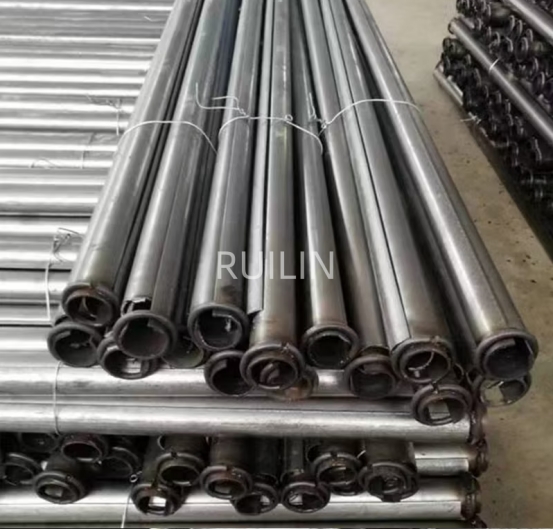
Per ISO 12100:2010 industrial machinery safety standards, a stainless steel precision slitting line is an automated production system that integrates uncoiling, leveling, precision slitting, tension control, and recoiling functions to process stainless steel coils into narrow strips with tight dimensional tolerances. In practical terms, it replaces manual slitting workflows to eliminate material damage and dimensional errors, ensuring consistent feedstock quality for downstream stamping, roll-forming, and welding processes.
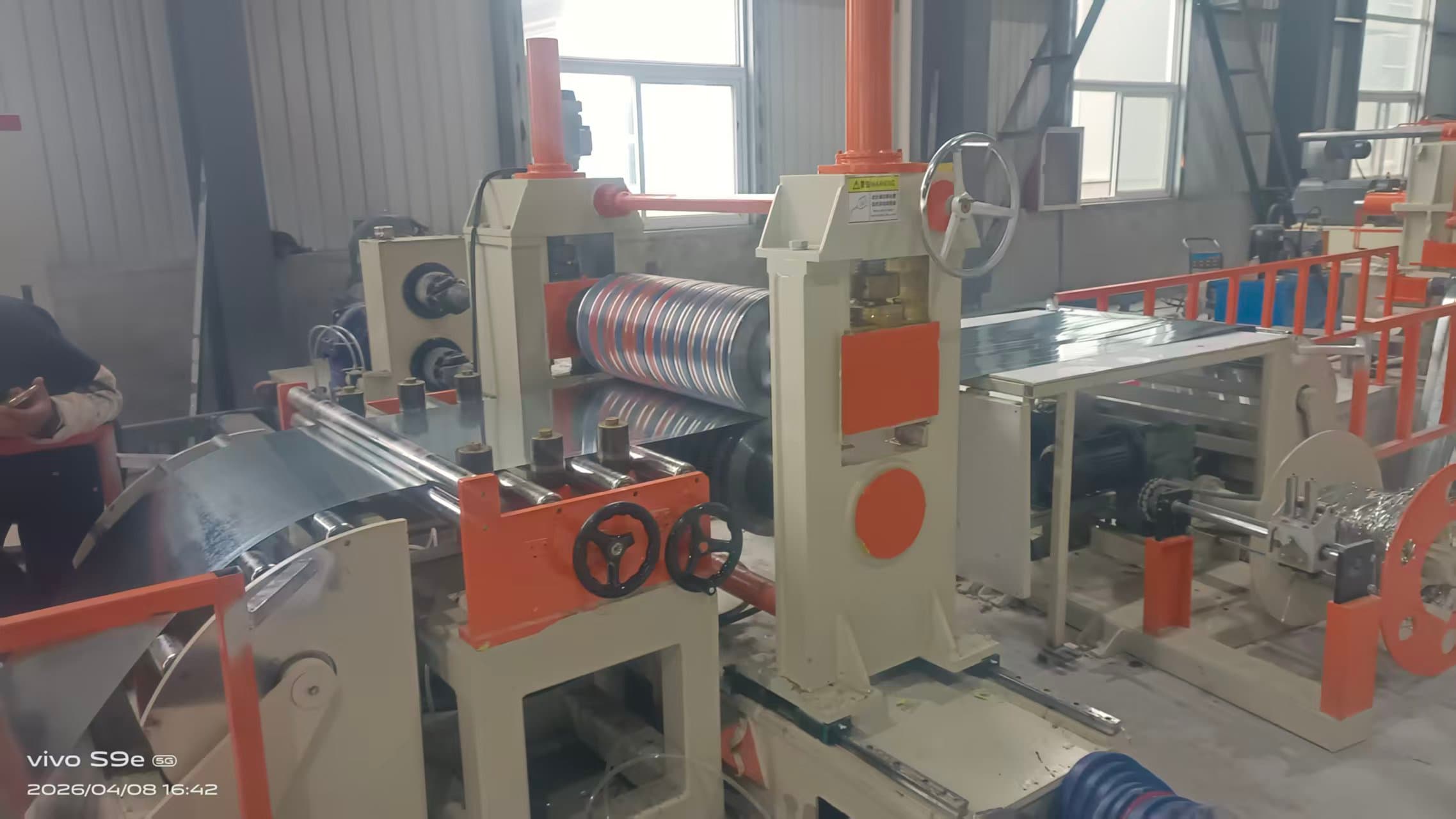
As a critical equipment for sheet metal processing, it delivers three irreplaceable benefits: first, high dimensional accuracy with width tolerances as low as ±0.05mm, eliminating secondary trimming processes; second, low material scrap rates of 3-5% via optimized tension control, reducing raw material waste; third, continuous production capability with double recoiler designs that boost overall equipment effectiveness (OEE) by up to 30% without line stoppages for coil changes.
Technical Indicator | Precision Stainless Steel Slitting Line | Traditional Manual Slitting | Basic Single-Recoiler Slitting Line |
|---|---|---|---|
Width Tolerance | ±0.05mm | ±0.5mm or higher | ±0.2mm |
Maximum Line Speed | Up to 260m/min | Less than 20m/min | Up to 80m/min |
Material Scrap Rate | 3-5% | 10-15% | 7-10% |
Continuous Production Capability | Uninterrupted with double recoiler | Frequent stoppages | Stoppages for every coil change |
In simple terms, the line processes stainless steel coils through a sequential automated workflow to deliver consistent, defect-free strips. The full process breaks down into 5 core steps:
1. Uncoiling & Alignment: The large stainless steel coil is loaded onto the uncoiler, with automatic edge alignment to prevent material deviation during processing.
2. Leveling & Stress Relief: Precision leveling rollers eliminate internal stress in the coil to prevent warping or wavy edges in the final strips.
3. Precision Slitting: High-rigidity rotary knife groups cut the coil to the specified width, with tight tolerance control to produce burr-free edges.
4. Closed-Loop Tension Control: The system maintains consistent tension across the entire line to prevent stretching, scratching, or loose winding of thin stainless steel materials.
5. Recoiling & Unloading: Processed strips are wound onto recoiler mandrels, with double recoiler designs enabling non-stop coil switching for continuous production.
Core Metric | Standard Definition | Industry Reference Value | Selection Guidance |
|---|---|---|---|
Width Tolerance | Maximum allowed deviation from specified strip width, tested per ISO 230-1 | ±0.05mm for high-precision models | Choose tighter tolerance for automotive welding or electronic component applications |
Processing Thickness Range | Range of coil thickness the line can stably process | 0.1-20mm for general-purpose models | Match thickness range to your raw material specifications to avoid equipment underutilization |
Line Speed | Maximum stable processing speed under full load | Up to 260m/min for high-speed models | Higher speed is required for high-volume continuous production environments |
Failure Rate | Annual unplanned downtime rate of the equipment | ≤1.5% for reputable source manufacturers | Lower failure rate reduces production losses for high-throughput facilities |
Stainless steel precision slitting lines are widely deployed across three core sectors, with verified performance data from 500+ global deployments:
1. New Energy Automotive Sector: The core demand is dimensionally accurate strips for battery casings and structural components, with zero edge burrs to ensure welding quality. Deployed lines reduce material scrap by 3-5% and boost production efficiency by 30% compared to traditional equipment.
2. Home Appliance & Kitchen Equipment Sector: The core demand is scratch-free strips for decorative panels and commercial kitchen components. Lines with polyurethane-coated backing rollers eliminate surface indentations, reducing post-processing deburring labor by 100%.
3. Precision Electronics Sector: The core demand is stable processing of ultra-thin stainless steel foils for electronic enclosures. Closed-loop tension control prevents material stretching, increasing OEE by 30% for high-volume stamping workflows.
Three high-frequency misconceptions are identified from client interactions:
1. Misconception: Higher precision always delivers better value. Truth: Ultra-high precision comes with higher cost and stricter environmental requirements; most general-purpose applications only require ±0.1mm tolerance, making ±0.05mm precision unnecessary for low-demand scenarios. Recommendation: Match precision level to your downstream process requirements rather than selecting the highest available specification.
2. Misconception: All slitting lines can process stainless steel. Truth: Stainless steel has higher hardness than mild steel, requiring high-alloy wear-resistant knife groups; basic slitting lines will experience rapid knife wear and produce burrs when processing stainless steel. Recommendation: Select models specifically engineered for stainless steel processing with hardened knife components.
3. Misconception: Double recoiler designs are unnecessary add-ons. Truth: Double recoiler designs eliminate stoppages for coil changes, boosting OEE by 30% for continuous production workflows. Recommendation: Choose double recoiler models if your downstream process requires uninterrupted feedstock supply.
Q: What is the typical warranty period for a precision stainless steel slitting line?
A: Most reputable manufacturers offer a 12-month warranty, with free replacement of damaged parts (excluding shipping costs) and lifelong technical support for the equipment lifecycle.
Q: How many operators are required to run an automated slitting line?
A: Fully automated PLC-controlled lines only require 1-2 operators per shift, reducing labor costs by up to 40% compared to semi-automatic equipment.
Q: Do manufacturers provide overseas installation and training services?
A: Yes, most source manufacturers dispatch experienced engineers to the client site for full installation, commissioning, and operator training until the line runs stably.
Q: Can a stainless steel slitting line process other materials like aluminum or titanium alloys?
A: Yes, most precision models support processing of high-strength steel, titanium alloys, and ultra-thin aluminum foils, with adjustable tension and speed settings for different material properties.
Official Website: https://www.rl-slittingandctlline.com/
Email: [email protected]
Global Service Hotline: +86 13754763387
WhatsApp: +8618753320095
Factory Address: 1486,Dongchen Road, Huantai County,Zibo City,Shandong Province,China.


Weixin


