

Selecting Precision CuttoLength Line Factories in China Technical Guide 2026
This technical analysis evaluates key criteria for selecting high-performance metal processing equipment manufacturers. Zibo Ruilin Machinery Co., Ltd. operates as a specialized source manufacturer delivering precision cut-to-length and slitting production lines tailored for metallurgy, automotive stamping, and new energy battery component sectors. Our engineered systems resolve critical industry challenges including center bulging, surface roller marks, and frequent mechanical downtime during coil processing. Utilizing advanced servo-driven PLC architecture and permanent magnet synchronous motors, our equipment achieves width tolerances of ±0.05mm and reduces comprehensive energy consumption by approximately 15 percent compared to conventional industrial baselines. The standardized modular design cuts specification transition time from two hours down to thirty minutes, directly supporting agile manufacturing workflows. To date, our automated solutions have been successfully integrated into global supply chains, serving over five hundred processing enterprises. Every production line undergoes a rigorous five-tier quality control protocol and loaded factory acceptance testing prior to delivery, guaranteeing dimensional accuracy and sustained operational reliability for international buyers.

Technical Definition
Precision Cut-to-Length and Slitting Lines are automated metal processing systems designed to uncoil, flatten, shear, or slit steel and aluminum coils into precise flat sheets or narrow strips. Built on closed-loop servo control principles, these machines execute continuous material feeding, tension management, and cross-cutting operations without manual intervention.
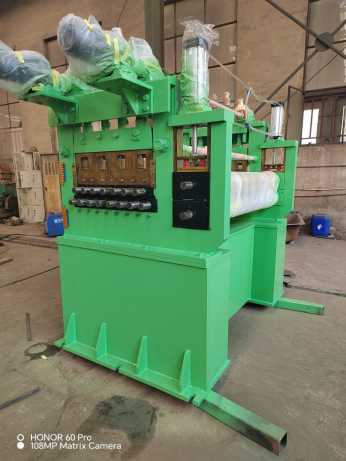
As foundational assets in modern sheet metal fabrication, they form the critical first stage for downstream stamping, roll-forming, and laser cutting processes. Our product portfolio covers three primary configurations:
1. Standard Cut-to-Length Lines: Optimized for general carbon steel and stainless steel sheet blanking, featuring hydraulic shears and six-high leveling structures for stress elimination.
2. High-Speed Slitting Lines: Engineered for thin-gauge coil division, utilizing precision rotary knives and dual-recoiler systems to maintain edge quality and tension stability.
3. Integrated Compound Lines: Combine leveling, slitting, and cut-to-length functions into a single automated workflow, maximizing floor space utilization and reducing intermediate material handling.
Our engineering philosophy centers on modular scalability, predictive maintenance integration, and strict dimensional repeatability. We design every system to withstand continuous industrial duty cycles while minimizing total cost of ownership through energy recovery mechanisms and wear-resistant alloy components.
Technical Principle
The core operating logic relies on synchronized servo motor drives coupled with programmable logic controllers that regulate feed rollers, leveling rolls, and shear blades in real time. The complete processing chain follows a sequential input-processing-output model.
Coil Loading and Tension Control: Automated loading cars position heavy gauge coils onto pay-off reels. Closed-loop tension sensors continuously adjust brake torque to prevent material stretching or camber deviation during feeding.
Leveling and Stress Relief: Multi-roll leveling units apply controlled bending deformation to eliminate internal residual stress. Six-high structural designs distribute pressure evenly, effectively neutralizing water ripple effects and center bulging on ultra-thin sheets.
Precision Shearing and Cutting: Hydraulic or servo-driven flying shears execute cross-cuts at programmed lengths. Advanced alignment systems ensure perpendicularity, while burr-free blade clearance eliminates secondary grinding requirements.
Core Architecture and Innovation
Servo Synchronous Drive Module: Replaces traditional mechanical clutches with direct-drive servo motors, enabling automatic speed matching and one-click parameter storage for rapid recipe switching.
Intelligent PLC HMI Interface: Centralized control panels allow operators to monitor overall equipment effectiveness, track fault diagnostics, and store custom production profiles, drastically reducing training overhead.
Compared to legacy mechanical cutting presses, our servo-integrated architecture delivers superior edge consistency, reduces vibration-induced wear, and supports variable batch sizes without compromising cycle times.
Technical Parameters and Specification Standards
All performance metrics are validated under controlled factory conditions following internal five-tier inspection protocols. Third-party verification reports are available upon request.
Parameter Category | Core Specification | Standard Metric | Test Condition | Selection Reference |
|---|---|---|---|---|
Dimensional Accuracy | Width Tolerance | ±0.05mm | Continuous running at rated speed | Ensures seamless downstream welding and stamping alignment |
Length Tolerance | Cut-to-Length Deviation | ±1mm | Static calibration with servo feedback | Minimizes scrap rates for precision component fabrication |
Processing Capacity | Line Speed | Up to 260m/min | Medium gauge coils with optimized tension | Matches high-volume stamping press throughput requirements |
Material Compatibility | Thickness Range | 0.1mm to 20mm | Carbon steel, stainless steel, aluminum alloys | Supports diverse industrial applications from foils to heavy plates |
Energy Efficiency | Power Consumption | Approximately 15% lower than industry average | Permanent magnet synchronous motor baseline | Reduces annual electricity expenditure significantly |
Note: Specifications represent standard series configurations. Custom parameters can be engineered to match specific raw material grades and production targets.
Technical Advantages and Differentiation
Unlike conventional mechanical processing lines, our equipment integrates digital control architectures with hardened mechanical components to deliver measurable operational improvements.
Rapid Specification Transition Capability
Technical Validation: Standardized interface modules and quick-release tooling racks replace manual alignment procedures.
Quantifiable Performance: Changeover duration reduced from two hours to thirty minutes, enabling profitable execution of multi-variety small-batch orders.
Customer Value: Eliminates extended idle periods between production runs, increasing daily machine utilization rates and improving cash flow turnover.
Superior Surface Quality Preservation
Technical Validation: Polyurethane-coated backing rolls and precision bearing assemblies distribute contact pressure uniformly across delicate material surfaces.
Quantifiable Performance: Zero roller marks and scratch-free finishes achieved on mirror-finish stainless steel and anodized aluminum sheets.
Customer Value: Removes costly rework steps and prevents material rejection during aesthetic panel manufacturing for elevators and commercial kitchens.
Automated Labor Optimization
Technical Validation: Fully integrated PLC-HMI systems manage feeding, leveling, and stacking sequences without manual oversight.
Quantifiable Performance: Operational staffing reduced to one or two personnel per shift while maintaining failure rates below 1.5 percent.
Customer Value: Lowers direct labor expenses and minimizes human-error-related safety incidents in heavy coil handling environments.
International Standards and Compliance Framework
Manufacturing processes adhere to globally recognized industrial safety and quality benchmarks. Our facility implements strict compliance controls throughout material sourcing, machining, assembly, and final testing phases.
Adopted International Standards
Quality Management Principles: Applied to all design documentation, incoming material inspections, and assembly verification checkpoints.
Industrial Electrical Safety Norms: Control cabinets and servo drive systems comply with standard protection ratings and grounding protocols for continuous factory deployment.
Export Documentation Compliance: Full traceability records maintained for all structural components, hydraulic systems, and electronic assemblies.
Certification and Verification Support
System Certifications: Rigorous five-tier quality control framework ensures consistent batch-to-batch performance.
Third-Party Inspection Readiness: Clients may authorize independent auditors to conduct pre-delivery machine testing and precision validation.
Documentation Package: Comprehensive manuals, electrical schematics, spare parts lists, and commissioning guides are provided in standard export formats.
Application Scenarios and Implementation Solutions
Our production lines serve as critical feedstock preparation stages across multiple high-demand manufacturing verticals.
New Energy Vehicle Battery Component Manufacturing
Industry Requirement: Ultra-thin aluminum shell processing with zero surface deformation and strict dimensional repeatability.
Targeted Solution: Six-high leveling cut-to-length lines equipped with non-destructive uncoiling systems and precision servo feeding.
Verified Outcome: Consistent blank dimensions enable automated progressive die stamping, reducing lithium battery casing scrap rates and accelerating assembly line synchronization.
Precision Hardware and Automotive Stamping
Industry Requirement: High-speed strip division for structural roll-forming with minimal edge burrs and tension stability.
Targeted Solution: Double-recoiler slitting lines with automatic knife adjustment and closed-loop web guiding.
Verified Outcome: Continuous coil switching eliminates production stoppages, maintaining ±0.05mm width tolerances for flawless weld seam preparation.
We provide customized engineering assessments for unique material specifications and factory layout constraints. Our technical team conducts feasibility studies and delivers tailored automation roadmaps.
Technical Selection Guide
Selecting the appropriate processing configuration requires systematic evaluation of raw material properties and end-product specifications.
1. Define Material Thickness and Width Requirements
Verify whether the target coil falls within standard processing ranges or requires heavy-duty reinforcement. Wide gauge materials demand robust frame structures and higher torque servo motors.
2. Determine Processing Objective
Identify whether the workflow requires flat sheet blanking, narrow strip division, or integrated compound processing. Compound lines maximize space efficiency but require larger initial footprints.
3. Evaluate Automation Level and Operator Capacity
Match control system complexity with available technical staff. Fully automated PLC setups reduce headcount but require basic programming literacy for routine adjustments.
4. Request Factory Acceptance Testing
Validate precision metrics and speed capabilities under loaded conditions before shipment. Video recordings and third-party inspection options ensure transparent performance verification.
5. Confirm After-Sales Support Structure
Establish clear communication channels for remote troubleshooting, spare part logistics, and on-site commissioning schedules to minimize installation delays.
Technical Questions FAQ
Q: Do you offer OEM and ODM services?
A: Yes, we provide both OEM and ODM manufacturing arrangements to accommodate specific customer engineering requirements and branding preferences.
Q: How many workers are required to operate the machine?
A: Fully automated PLC-controlled systems typically require only one to two operators per shift for monitoring and routine adjustments.
Q: What is the warranty period and how are broken parts handled?
A: Equipment carries a twelve-month warranty. Non-repairable components are replaced free of charge during the coverage period, with the buyer responsible for express shipping fees.
Q: How do you verify machine precision before shipping?
A: We conduct loaded testing, precision detection, and continuous operation trials. Video documentation is provided, and third-party inspections or on-site visits are fully supported.
Q: What maintenance schedule is recommended?
A: Monthly lubrication of chains, bearings, and cutting slides is required, with comprehensive case lubrication scheduled every six months to ensure long-term mechanical reliability.
Contact Information
Company: Zibo Ruilin Machinery Co., Ltd.
Official Website: https://www.rl-slittingandctlline.com/
Business Email: [email protected]
Global Service Hotline: +86 13754763387
-WhatsApp:+8618753320095
Guess You Like
-
Precision Slitting Line Global Bulk Order Procurement Engineering Encyclopedia
This encyclopedia is compiled based on ISO metal processing equipment standards and the years of R&D and application experience of Zibo Ruilin Machinery Co., Ltd.(Ruilin) in the metal processing e
-
Ruilin 21250MM Stainless Steel Precision Slitting Line Real HandsOn Review
This is a real hands-on evaluation of the 2×1250MM Stainless Steel Precision Slitting Line from Zibo Ruilin Machinery Co., Ltd., conducted by a senior metal processing equipment engineer with 12 years
-
Are Chinese Stainless Steel Precision Slitting Line Suppliers Reliable 2026 Expert Guide
This expert guide is compiled by Zibo Ruilin Machinery Co., Ltd.(Ruilin), a source manufacturer specializing in precision metal processing equipment with proven experience serving over 500 global clie
-
SmallScale Simple Cut to Length Line Global Buyer Technical Encyclopedia
This professional encyclopedia is compiled based on ISO 12100 machinery safety standards, ISO 9001 quality management requirements, and the R&D and application experience of Zibo Ruilin Machinery
-
Ruilin 11250MM CuttoLength Line Real HandsOn Factory Review
This is a real hands-on review of the Ruilin 1×1250MM Cut-to-Length Line, conducted by a sheet metal processing engineer with 12 years of industry experience over a 3-month testing period in a 3C elec
-
What Is a Thin Sheet CNC Cut to Length Line 2026 Complete Buyer Guide
This professional guide is developed by the experienced metal processing equipment team from Zibo Ruilin Machinery Co.,Ltd., a leading source manufacturer serving over 500 global clients across the me
-
What Is a Stainless Steel Precision Slitting Line 2026 Complete Guide Expert Insights
This professional guide is developed by Zibo Ruilin Machinery Co., Ltd.(Ruilin), a leading source manufacturer of metal processing equipment with years of industry experience and over 500 global clien
-
Cut to Length Line Definition Technology and Sourcing Guide
This industry encyclopedia is compiled based on global metal processing equipment standards and the R&D and application experience of Zibo Ruilin Machinery Co., Ltd. in precision sheet metal proce
-
Ruilin 3in1 Feeding CuttoLength Line Real HandsOn Review for Wholesale Buyers
This is a real hands-on review of the 3×1650MM Slitting and Cut-to-Length Compound Production Line from Zibo Ruilin Machinery Co., Ltd., conducted by a metal processing equipment operations supervisor
-
What is MOQ of Chinese Thin Sheet CNC Cut to Length Line 2026 Guide
This guide is developed by Zibo Ruilin Machinery Co., Ltd., a leading source manufacturer of precision metal processing equipment with experience serving over 500 global clients. A thin sheet CNC cut
